Subscribe to newsletter
Subscribe to receive the latest blog posts to your inbox every week.


.png)
65% of consumers surveyed by Salesforce say they’ll remain loyal to companies that offer a more tailored experience.
Before going further, let’s picture this: your favorite app knows what you want before you do. You open it, and there’s your next must-have product, not only this, it also offers a discount tailored to your buying rhythm, and support that anticipates issues before they arise. Now, that’s just not limited to personalization, that’s prediction, and it’s transforming customer experience as we know it.
We are now stepping into the new era where customer experience (CX) isn’t just reactive or personalized. It’s predictive.
Customer experience (CX) has always evolved with technology. From face-to-face interactions to omnichannel engagement, we’ve seen a massive leap in how businesses connect with consumers. Now going ahead, we are witnessing the next evolution that comes right after personalization. The trajectory goes as follows:
Example: A local bakery, before the 2000s, knew regular customers by name, remembered their favorite pastries, and offered personal greetings.
Experience: Warm, human interaction, but limited to physical proximity and store hours.
Example: Amazon’s “Customers who bought this also bought…” and personalized homepage recommendations based on browsing and purchase history.
Experience: Data-driven, scalable, but still reactive and based on previous behavior.
Example: Sephora integrates in-store, mobile app, and online experiences. A customer can scan a product in-store and get personalized product recommendations, reviews, and tutorials on their phone.
Experience: Seamless cross-channel journey with personalized touchpoints.
Example 1: Netflix doesn’t just recommend movies, you get thumbnails personalized to your preferences (e.g., showing an action scene or a romantic lead, depending on your taste). It predicts not only what you might watch next but how to present it to you.
Experience: Predictive, real-time personalization with contextual relevance.
Example 2: Starbucks, using app usage, order history, and location data, sends custom offers via push notifications, like offering an iced drink on a hot afternoon near one of their locations.
Experience: Personalized outreach, timed and localized.
Personalization uses past data, which means, browsing history, purchases, preferences are taken into consideration to serve content or offers. It’s reactive. But in a hyper-dynamic market where 64% of consumers expect companies to respond to their inquiries in real-time, brands need to be faster, smarter, and one step ahead. With the integration of AI, prediction takes it up a notch, giving businesses real-time insights with unprecedented accuracy. Below are some of the related highlights of predictive analytics:
Companies that use predictive analytics are 2.9x more likely to report revenue growth above industry average.
When everyone personalizes, prediction becomes the differentiator. Here how the top brands are leveraging the tech:
1. Spotify: “Made For You” Playlists
Spotify doesn’t just react to what you’ve listened to, it predicts what you’ll want next, factoring in your listening habits, the time of day, your location, and even how your tastes evolve.
Prediction Layer: Combines behavior, context, and collective trends to serve the right vibe before you even search.
2. Uber: Destination & Ride Prediction
Open the Uber app at 8:00 AM on a weekday, and it suggests your office as a likely destination. It may even offer a preferred driver or car type based on your past behavior.
Prediction Layer: Uses time, location, and routine to anticipate your next move, and make it a one-tap experience.
3. Google Maps: Contextual Routing
When you get in your car, Google Maps often pops up with “25 minutes to Home” without any input. It knows your patterns, and offers not just directions, but smart rerouting based on traffic you haven’t hit yet.
Prediction Layer: Anticipates intent (e.g., you're heading home) and adapts in real time to changing conditions.
These companies don’t wait for customer signals, they predict them.
Stitch Fix, the online styling service, uses AI to predict what customers will keep, improving satisfaction and reducing returns by 30%. Prediction, therefore, doesn’t just elevate CX, it drives retention, revenue, and real connection.
Predictive customer experience (CX) leverages advanced AI algorithms and analytics models to perform anticipatory analyses of customer data. It enables the system to forecast future customer behaviors, preferences, and emotional states based on historical and real-time inputs.
This proactive approach facilitates dynamic, context-aware interactions designed to optimize engagement, satisfaction, and loyalty throughout the entire customer journey, thus, transforming traditional reactive service into a forward-looking, personalized experience.
Imagine, a supermarket app notices that a customer frequently buys gluten-free bread every month. A few days before the next expected purchase, the app sends a reminder and offers a discount on gluten-free products, ensuring the customer has what they need without having to search for it.
It’s about serving before being asked, solving before it’s a problem, and connecting before disconnection happens.
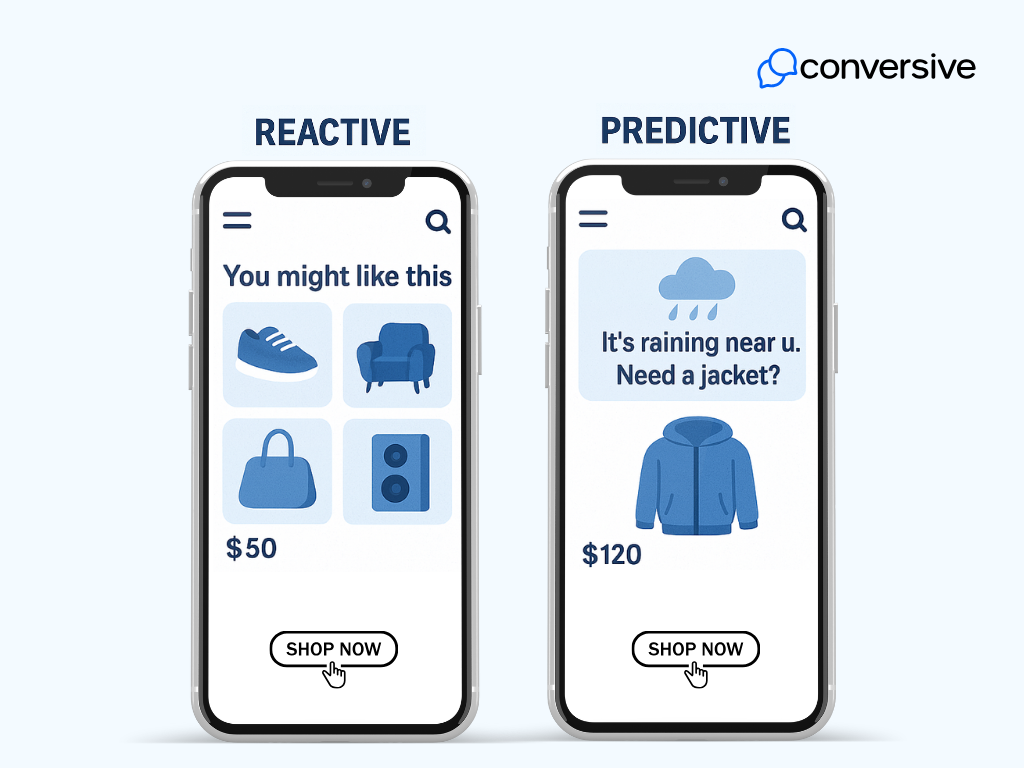
Predictive personalization stands out because it tries to anticipate what users will want before they ask for it. It leverages advanced algorithms, like machine learning, to make guesses about future needs. Instead of just reacting to what users do or say, it gathers and analyzes various types of information, such as location, personal details, and past behaviors, to make educated guesses. This helps systems prepare personalized content, offers, or experiences in advance, making interactions more relevant and engaging for users.
Business Value and Customer Expectations
A report from McKinsey showed that companies using AI to improve customer experience tend to see a 10-20% boost in how happy their customers are, and they can also see revenue go up by as much as 40%.
Real-Life Brand Examples Using Predictive CX
AI is reshaping the classic marketing mix, or the 4 P’s, that is, Product, Price, Place, and Promotion, into a dynamic, predictive engine for customer experience.
AI taps into feedback, behavior, and trends to guide product development.
Example: LEGO uses AI to predict demand for new sets before full-scale rollout.
Machine learning models adjust prices in real-time based on user behavior, timing, and demand patterns.
Example: Uber’s surge pricing leverages predictive algorithms, not guesswork.
AI predicts where each customer is most likely to engage, be it an app, website, SMS, or in-store.
Insight: Ninety-eight percent of Gen Z own a smartphone, spending over 4 hours daily on apps like TikTok, Instagram, and YouTube, which means brands that reach them on their preferred platforms would significantly increase engagement and loyalty.
By analyzing past performance and behavioral data, AI forecasts which campaigns will hit the mark.
Example: Amazon attributes a 35% sales boost to AI-driven recommendations.
Predictive analytics brings intelligence into personalized interactions, and with the help of machine learning it anticipates what a customer is likely to do next. It shifts CX from reactive to proactive, creating seamless, context-aware experiences.
By analyzing behavioral, transactional, and contextual data, brands can move beyond simply responding to customers and start orchestrating experiences in advance.
Predictive analytics supports every stage of the CX lifecycle:
AI has evolved from observing patterns to predicting intent, and that’s where the real power lies. Today’s leading brands are no longer guessing. With predictive AI, they’re answering questions like:
These predictions help companies plan and create experiences based on what customers want, instead of responding only after things happen.
By blending both, companies can operate with agility and depth, providing accurate and careful service at every touchpoint.
Customer service is changing from just fixing problems when they happen to helping ensure everything goes smoothly before issues occur, here’s how:
The future of support isn’t just faster, it’s smarter, quieter, and more human-centric, and all this is possible due to predictive insight.
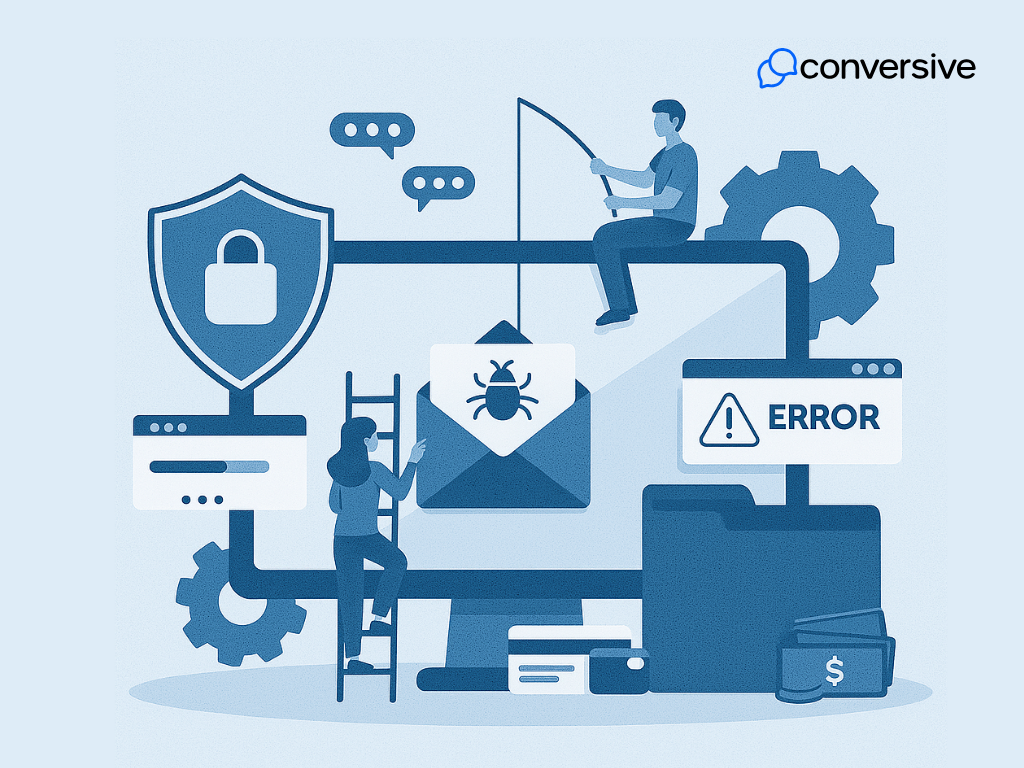
With great predictive power comes a serious need for responsibility. As AI begins to forecast everything from churn to emotional state, we need to make sure there are clear rules to use it responsibly.
People increasingly want to know how and why choices are made. Whether it's suggesting products or changing prices, being open about the process helps earn trust. Companies like Apple now show users how their information is used and make it simple to choose not to share data if they want.
AI systems learn from past information, which can sometimes contain unfair biases. For example, if a loan decision system favors certain groups over others without good reason, it can lead to problems for the company's reputation and legal issues. To address this, companies like Salesforce and IBM are putting resources into teams and tools to check for fairness and prevent such biases.
Predicting what customers want relies on gathering data, but it's very important to do so in a fair and honest way, but collecting it ethically is non-negotiable. Customers should always know exactly what information they are sharing and agree to it. Companies like Spotify and Google now give users detailed options to choose how their data is used and shared.
Regulatory Reminder: Laws such as GDPR, CCPA, and the new EU AI Act are changing the way predictive tools need to work, especially when dealing with personal or behavioral information. Ethical AI isn’t just compliance, it’s a brand differentiator in a trust-first market.
We’re only scratching the surface of what predictive CX can do. As AI matures, the next wave of innovation will be defined by autonomy, augmentation, and empathy, here’s how:
The brands that will lead in the next era aren’t just responsive, they’re predictive by design. And the future of CX is not just tech-enabled, it’s AI-orchestrated, ethically grounded, and customer-first.
The future of customer experience isn’t around the corner, it’s happening right now. Brands that can’t anticipate what their customers need will quickly fall behind those that can.
At Conversive, we help companies stay ahead with predictive CX strategies that actually scale. Our plug-and-play AI and analytics tools make it easier to turn customer signals into action, without the complexity.
Want to see how it works in the real world?
[Book a demo with Conversive →]
It’s using AI and data to anticipate customer needs and deliver proactive, personalized engagement.
By analyzing behavioral, contextual, and transactional data with machine learning.
Personalization reacts to the past; prediction anticipates the future.
Clickstream, purchase, support logs, context (time, device), and feedback data.
Yes, by identifying early signs and enabling proactive retention.
With partners like Conversive, it’s faster and more accessible than ever.
Yes, when done transparently, fairly, and with customer consent.

Subscribe to receive the latest blog posts to your inbox every week.

We respond with 10 support messages to every support email – our customers love it.

Greg Royse
CEO, Tidy

“We were missing 58% of incoming calls. Now we answer 80% + of all incoming enquiries.”

Ajaz Elahi
Director, Sinspeed

“This product is AMAZING and is changing my business. It reaches clients 100x better than email.”

Michael Goldenberg
President, DebtCare Canada

“Conversational Messaging capabilities of SMS-Magic are among the best in the industry and offers security and reliability for SMBs to Large Enterprise Customers.”

Stan Petit
API Senior Partner Sales Manager, Vonage

SMS-Magic is a simple, powerful, SMS solution for Salesforce that has become integral to our day-to-day operations.

Martin McCauley
Director of Patient Services, BioSpine Institute

“If our loan applicants did not receive timely SMS-Magic text messages, we wouldn’t be funding loans & we would lose customers.”

David Ross
Head of IT, Upstart

“Having full-context conversation history from SMS-Magic helps us understand what has been sent to the customer across different departments and if those messages have been opened.”

Camilla Mills
Marketing Campaigns Manager, DaySmart

We average a 59% response rate from clients to text message surveys.

Craig Garber
CFO, LifeMoves

.png)