Subscribe to newsletter
Subscribe to receive the latest blog posts to your inbox every week.


.png)
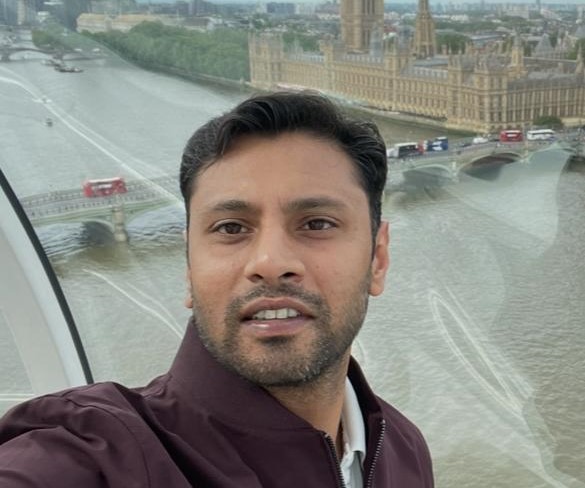
Eishan’s journey through the telecom world spans over a decade, he’s watched messaging transform from the humble SMS to rich, AI-powered conversations that reach customers across continents and channels.
From simple SMS to rich, AI-powered conversations, he’s worked closely with businesses navigating the shift from transactional alerts to truly engaging, multi-channel customer journeys. As messaging has shifted toward RCS, CPaaS, and conversational commerce, he's been part of the evolution.
Curious to hear how he sees the future of messaging? Scroll down for the interview:
The SMS landscape in India has undergone a dramatic transformation over the past decade, shaped by technological, regulatory, and behavioral shifts.
From Person-to-Person (P2P) to Application-to-Person (A2P) Dominance
· Early 2010s: SMS was widely used for personal communication.
· Now: A2P SMS (used by businesses for OTPs, alerts, promotions) dominates. Personal messaging has largely shifted to platforms like WhatsApp, Telegram, and Signal.
Despite the rise of data-driven apps, SMS remains reliable and accessible in areas with poor connectivity. Government schemes and financial inclusion efforts still rely heavily on SMS.
With the explosion of digital services—banking, e-commerce, fintech, and government portals—SMS became the backbone for: One-Time Passwords (OTPs), Transaction alerts, Service updates
Brands shifted to rich media channels (WhatsApp Business, RCS, email, etc)
Communication Platforms as a Service (CPaaS) has become a game-changer in how businesses in India, and globally, manage customer communications. Key features being - Omnichannel messaging, Automated workflows, Analytics and personalization
SMS is now part of a larger customer engagement strategy. RCS is positioned as the next-gen SMS, offering: Rich media, Branding, Verified sender IDs. Adoption in India is still nascent, but growing, especially with Android's support.
The rise of OTT messaging platforms like WhatsApp, Telegram, Signal, and others has significantly disrupted the traditional telecom product strategy, especially around SMS.
With P2P SMS declining, telcos doubled down on A2P SMS and CPaaS offerings:
· Enabling businesses to send OTPs, alerts, and transactional messages
· Offering APIs and dashboards for campaign management
RCS is telecom’s answer to OTT messaging:
· Offers rich media, branding, verified sender IDs
· Telcos are working with Google and OEMs to push RCS adoption
· Still early-stage in India, but promising for enterprise use cases
Telcos like Jio and Airtel have evolved into digital conglomerates, offering cloud, fintech, entertainment, and IoT services. SMS is now just one part of a broader digital engagement strategy.
Trust in messaging has become a critical issue in India’s telecom and digital communication landscape, especially with the surge in spam, phishing, and fraud. Here is how Industry and Enterprises are responding to gain back trust of end users:
TRAI’s DLT Framework – Introduced to curb spam and fraud by enforcing:
· Template registration
· Sender ID verification
· Consent and preference management
Brands can send branded, verified messages with logos and checkmarks. RCS adds rich media and encryption, reducing spoofing risks.
Telcos and CPaaS providers are using machine learning to detect and block suspicious traffic in real time. Many brands are shifting to WhatsApp Business API, which offers:
· Verified business profiles
· End-to-end encryption
· Better user trust and engagement
Banks, telcos, and regulators are running awareness drives on:
· Not sharing OTPs
· Recognizing phishing attempts
· Reporting frauds
So, What’s Next?
· Trust Layering: Expect more verified sender frameworks across channels.
· Unified Consent Management: A single platform for users to manage communication preferences across brands.
· Stronger Penalties: For violators of spam and fraud regulations.
· Rise of Consent-Based Marketing: Moving from push to pull-based engagement.
RCS is rapidly transforming the messaging landscape in India, especially in the enterprise communication and customer engagement space.
India and China are projected to account for 30% of global RCS business messages by 2025. RCS interactions in India surged by 850% in 2024, driven by brands integrating it with SMS for seamless customer journeys. During major sales events like Black Friday and Cyber Monday, RCS interactions spiked by over 1400%, showcasing consumer enthusiasm. By 2029, India is projected to have 254 million A2P RCS users, generating $544 million in revenue. Google has partnered with Jio and Vodafone Idea (Vi) to enable RCS infrastructure.
Consumers expect interactive, media-rich experiences, which RCS delivers directly in the native SMS inbox.
Indian brands are embracing chat-based shopping, support, and engagement. RCS enables:
· Product carousels
· Embedded payment links
· Real-time tracking
· AI-powered chatbots
This is especially impactful in e-commerce, BFSI, travel, and quick commerce. RCS messages have shown:
· 4x higher engagement than SMS
· 98% delivery rates
· 35%+ read rates
Unlike WhatsApp, RCS is hosted by telcos and falls under TRAI’s regulatory framework. This makes it more suitable for sensitive use cases like banking and government messaging.
RCS is 30–40% cheaper than WhatsApp Business messaging for enterprises. This makes it attractive for large-scale campaigns and transactional messaging
AI and analytics are playing an increasingly transformative role in SMS communication, especially in the enterprise and telecom sectors.
AI-Powered Spam & Fraud Detection – Machine learning models analyze message patterns, sender behavior, and content to detect: Phishing attempts, Spoofed sender IDs, Unregistered templates. Telcos and CPaaS platforms use AI to block or flag suspicious messages in real time, improving trust and compliance.
Predictive Analytics for Campaign Optimization – AI analyzes historical data to: Predict best times to send messages, Identify high-converting templates, Segment users based on behavior and preferences. This leads to higher engagement and lower churn
NLP is used to:
· Auto-generate message content based on campaign goals
· Understand user replies in two-way SMS (e.g., “Yes,” “No,” “More info”)
· Power chatbots over SMS for customer support and lead qualification
Real-Time Delivery & Engagement Analytics – Dashboards powered by AI show: Delivery rates, Open/read rates (via RCS or integrated platforms), Click-through and conversion metrics. Helps marketers adjust campaigns on the fly
AI enables hyper-personalized messaging by analyzing: Purchase history, Location, Device type, Engagement history
Smart Channel Routing – AI decides whether to send a message via: SMS, WhatsApp, RCS, Email. Based on user preferences, past behavior, and delivery success, ensuring maximum reach and cost efficiency
AI helps manage:
· Opt-in/opt-out preferences
· Consent logs
· Regulatory compliance (e.g., TRAI DLT in India)
· Reduces manual overhead and legal risk
The future of messaging in India and across emerging markets is being shaped by a powerful mix of technology, consumer behavior, and enterprise innovation. India, in particular, is not just adapting to global trends, it’s leading and influencing them.
Shift from SMS to Rich Messaging
· Traditional SMS is being replaced by RCS and OTT platforms like WhatsApp, offering:
· Verified sender IDs
· Rich media (images, buttons, carousels)
· Conversational flows
· By 2028, RCS and WhatsApp will capture 50% of India’s CPaaS market value
AI & GenAI Driving Personalization
Indian enterprises are investing in GenAI-powered chatbots, voice bots, and predictive analytics to:
· Automate customer support
· Personalize engagement
· Optimize campaign performance
Messaging is evolving into Conversational Experience as a Service (CXaaS)
Seamless integration of marketing, support, and transactions
Used heavily in e-commerce, fintech, and healthcare

Multi-channel messaging strategy
Convergent
SMS
Game Changer
Platformization
Don’t sell connectivity…. Build experience!!!!
Thanks, Eishan, for sharing your thoughts and walking us through the changing world of messaging. It was great to hear your take on where things are headed and how businesses are adapting. I appreciate you taking the time to be part of this conversation.
Tata Communications at a Glance:
Tata Communications is a leading digital ecosystem enabler, supporting the transformation of global enterprises, including 300 of the Fortune 500. The company carries 30% of the world’s internet routes and connects to 60% of global cloud providers. With over 25 years of presence in India’s digital landscape, Tata Communications continues to deliver secure, connected experiences that drive the New World of Communications™.

Subscribe to receive the latest blog posts to your inbox every week.

We respond with 10 support messages to every support email – our customers love it.

Greg Royse
CEO, Tidy

“We were missing 58% of incoming calls. Now we answer 80% + of all incoming enquiries.”

Ajaz Elahi
Director, Sinspeed

“This product is AMAZING and is changing my business. It reaches clients 100x better than email.”

Michael Goldenberg
President, DebtCare Canada

“Conversational Messaging capabilities of SMS-Magic are among the best in the industry and offers security and reliability for SMBs to Large Enterprise Customers.”

Stan Petit
API Senior Partner Sales Manager, Vonage

SMS-Magic is a simple, powerful, SMS solution for Salesforce that has become integral to our day-to-day operations.

Martin McCauley
Director of Patient Services, BioSpine Institute

“If our loan applicants did not receive timely SMS-Magic text messages, we wouldn’t be funding loans & we would lose customers.”

David Ross
Head of IT, Upstart

“Having full-context conversation history from SMS-Magic helps us understand what has been sent to the customer across different departments and if those messages have been opened.”

Camilla Mills
Marketing Campaigns Manager, DaySmart

We average a 59% response rate from clients to text message surveys.

Craig Garber
CFO, LifeMoves

.png)