Heading 1
Heading 2
Heading 3
Heading 4
Heading 5
Heading 6
Lorem ipsum dolor sit amet, consectetur adipiscing elit, sed do eiusmod tempor incididunt ut labore et dolore magna aliqua. Ut enim ad minim veniam, quis nostrud exercitation ullamco laboris nisi ut aliquip ex ea commodo consequat. Duis aute irure dolor in reprehenderit in voluptate velit esse cillum dolore eu fugiat nulla pariatur.
Block quote
Ordered list
- Item 1
- Item 2
- Item 3
Unordered list
Text link
Bold text
Emphasis
Superscript
Subscript
Since mobile messaging started, text messages have remained the primary way businesses communicate with their customers. But as the digital landscape evolves, so must the channels we use to connect with customers. SMS is now morphing to Basic RCS, which is a streamlined, secure, and brand-friendly evolution of simple text messaging.
In this blog, we break down what Basic RCS is, why it matters, and how it offers a low-friction path toward a richer messaging future, based on Mobile Ecosystem Forum's (MEF) Basic RCS Positioning Paper (May 2025), so let’s get started!
What Is Basic RCS?
Basic RCS (Rich Communication Services) is a text-only messaging format, capped at 160 characters, that delivers over the RCS channel instead of SMS. It looks simple on the surface but packs several enhancements that make it far more powerful than traditional text messaging.
Here’s how Basic RCS outshines SMS:
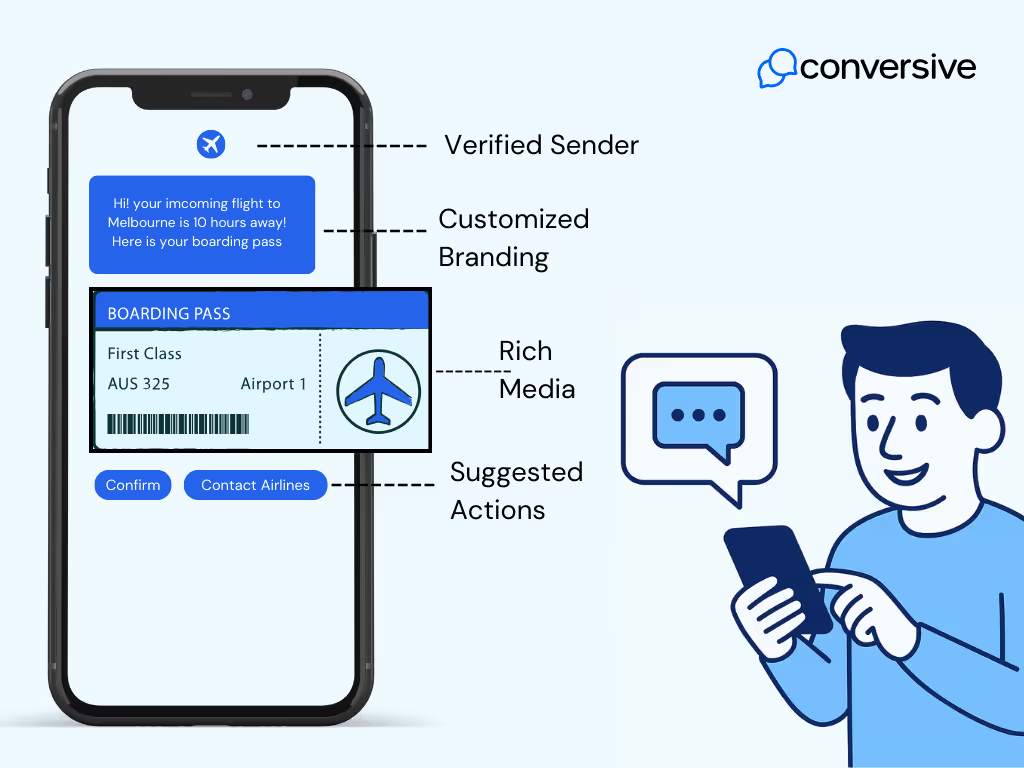
- Brand logo and name displayed: Basic RCS shows your brand’s name and logo, reinforcing recognition and credibility instantly.
- Verified sender badge to boost trust: Messages come with a verified checkmark, assuring recipients the sender is authentic and secure.
- Read receipts for insights: Get real-time feedback with delivery and read receipts, enabling smarter campaign tracking.
- Link previews for higher engagement: Embedded URLs auto-generate visual previews, making messages more engaging and clickable.
RCS vs SMS Feature Comparison
| Feature | Basic RCS | SMS |
| Brand logo | ✅ Yes | ⛔ No |
| Verified sender | ✅ Yes | ⛔ No |
| Read receipts | ✅ Yes | ⛔ No |
| URL preview | ✅ Yes | ⛔ No |
Unlike SMS, which uses short codes or alphanumeric sender IDs, Basic RCS messages are sent via verified bots, ensuring authenticity and eliminating spoofing.
Basic RCS and Full RCS
Basic RCS vs. Full RCS
As businesses explore RCS, it's important to understand the differences between its two main tiers: Basic RCS and Full RCS.
Here's a side-by-side comparison that highlights how Basic RCS serves as a starting point and Full RCS unlocks the platform's full potential.
| Feature / Capability | Basic RCS | Full RCS (Rich RCS / RBM) |
| Message Type | Text-only (up to 160 characters) | Rich media messages (images, carousels, buttons) |
| Sender Identity | Verified bot with logo and brand name | Verified bot with enhanced branding & profiles |
| Read Receipts | ✅ Yes | ✅ Yes |
| Link Preview | ✅ Supported (with Open Graph tags) | ✅ Supported + actionable buttons |
| Interactivity | ❌ Limited (manual reply only) | ✅ Suggested replies, suggested actions |
| Billing Category | Basic (non-conversational) | Single / Conversational |
| Opt-in Requirement | Inherits SMS opt-in (in most regions) | May require additional opt-in, depending on use |
| Use Case | Simple alerts, notifications, 1-way messages | Promotions, customer support, 2-way interactions |
| Setup Complexity | Low – similar to SMS setup | Moderate to High – bot logic, UX flow needed |
| API Integration | Basic API / SMPP integration | Full Google / GSMA APIs with media support |
| Analytics | Basic (e.g., read receipts, CTR with setup) | Advanced (user flows, button taps, delivery stats) |
| Cost Structure | Typically priced like SMS | Higher due to richer experience and conversion |
| Migration Path | Starting point for brands | Next step in messaging evolution |
In summary:
- Basic RCS = "SMS 2.0" → simple, branded, secure.
- Full RCS = "App-like messaging" → interactive, rich, and conversational.
Why Does This Matter Now?
The SMS channel, though still profitable, is under threat from multiple angles:
- Falling trust due to fraud: Widespread SMS fraud like smishing, spoofing are eroding user trust and exposing brands to reputational risk.
- Rising prices from mobile network operators (MNOs): Escalating SMS costs are squeezing margins and discouraging large-scale messaging.
- Artificially inflated traffic (AIT): AIT is driving up SMS volumes artificially, inflating costs without delivering real engagement.
- Migration to OTT platforms like WhatsApp: Brands and consumers alike are shifting to richer, more secure OTT messaging alternatives.
A recent industry study showed trust in SMS dropped by 25%, while RCS and WhatsApp usage surged by 75% and 42% respectively. For businesses relying on A2P (Application-to-Person) messaging, it’s time to adapt.
A Closer Look at the Benefits
Whether you're looking for better engagement or easier onboarding, Basic RCS delivers more value with less friction, its benefits include:
- Verified & Secure: Each Basic RCS message is tied to a verified brand bot, ensuring the sender is authentic. This greatly reduces the risk of phishing and spoofing.
- Improved Engagement: In A/B testing by Brazilian bank C6, Basic RCS messages delivered:
- 33% higher click-through rates
- 32% higher conversion rates (e.g., app installs)
- Brand Visibility: With logos, business names, and verified checkmarks, Basic RCS delivers a more branded and recognizable experience, even without rich media.
- Customer Insights: Read receipts offer valuable data to understand customer engagement, something traditional SMS can’t do.
- Low Cost, Easy Onboarding: Many carriers are price-matching Basic RCS to SMS rates, and setup requires just basic brand details, making it budget-friendly and simple to adopt.
RCS is the evolution of SMS, and in some markets (e.g., China), it is even mandated for 5G. Here are the key comparisons with WhatsApp and SMS:
Messaging App Feature Comparison
| Feature | RCS | SMS | WhatsApp |
| Default app | ✅ Yes | ✅ Yes | ⛔ No |
| Verified tick | ✅ Always | ⛔ No | ✅ Sometimes |
| Brand support | ✅ Yes | ⛔ No | ✅ Often |
| Read receipts | ✅ Yes | ⛔ No | ✅ Yes |
For Aggregators and Brands: What’s the Opportunity?
Whether you're an aggregator looking to expand your messaging capabilities or a brand aiming to elevate customer engagement, Basic RCS is the ideal starting point. Aggregators can offer clients a seamless SMS-to-RCS migration with minimal effort, while for brands, Basic RCS enables a smooth upgrade from SMS without requiring new opt-ins in most markets, helping reinforce brand identity. Below are the detailed value propositions for both aggregators and brands:
For Aggregators:
- Offer seamless SMS-to-RCS migration, no heavy lifting required.
- Enhance your portfolio with a low-barrier RCS entry point
- Help clients reduce fraud and increase trust
For Brands:
- No new opt-in required (in most markets)
- Reinforce brand identity and credibility
- Transition smoothly from SMS to richer messaging
- Start with Basic RCS and evolve toward full RBM (Rich Business Messaging)
Fighting Fraud with Basic RCS
Fraud is a major concern in A2P SMS, costing businesses over $3.2 billion annually. Basic RCS is built with safeguards:
- Only authorized aggregators and MNOs can send messages
- Every sender must go through strict brand verification
- Spoofing and phishing become far less effective in this environment
The MEF estimates that with proper rollout, Basic RCS could help prevent up to $821 million in fraud losses over three years.
A Stepping-Stone to Richer Messaging
Basic RCS isn’t the end goal, it’s the gateway. After adoption:
- Brands can gradually upgrade to richer message types (e.g., carousels, images)
- Google’s Brazil case showed richer messages overtook basics just six months after rollout
- Orange Spain anticipates 15% of all messages will be rich within a year of launch
Final Thoughts: An Evolution, Not a Revolution
Basic RCS is more than a tech upgrade, it’s a strategic opportunity to evolve your messaging with minimal friction. It offers:
- The trust and branding power businesses need
- A familiar format for customers
- The data and security that today’s digital environment demands
If you’re still relying on SMS for customer engagement, now’s the time to explore how Basic RCS can help you transition into a more secure, intelligent, and branded messaging future. For more info, you can download the full paper on Mobile Ecosystem Forum.