Subscribe to newsletter
Subscribe to receive the latest blog posts to your inbox every week.


.png)
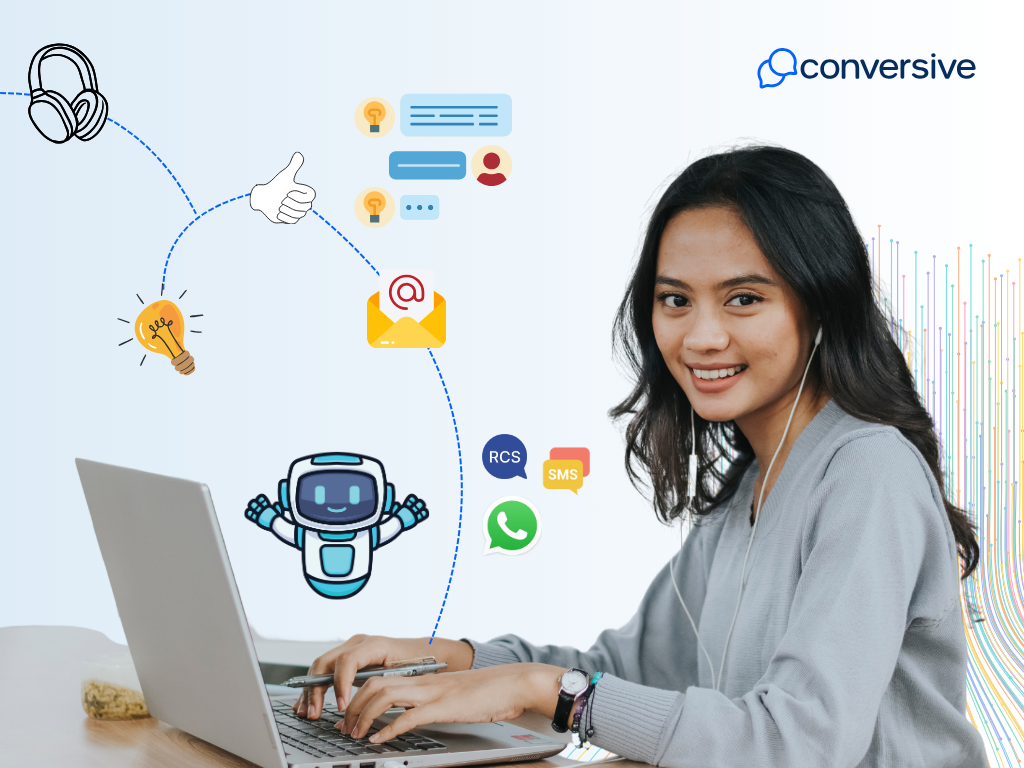
Imagine stepping into a store where the clerk greets you by name, already knows your preferences, suggests products you browsed online last night, and on top of it, even remembers your last “in-store purchase”. Now extend the same seamless experience enriched with personalization extending across your smartphone, laptop, smart speaker, and social media, that in essence, is what AI-powered omnichannel customer experience (CX) aims to deliver, and in 2025, it's not a dream, it's a business imperative.
Omnichannel customer experience is the cohesive, integrated journey a customer has with a brand across all channels, be it online or offline. It matters now more than ever. Why? Because customers demand it.
70% of customers expect companies to collaborate on their behalf so they don’t have to repeat themselves. And 80% of businesses report increased consumer spending (averaging 38% more) when their experiences are personalized. In both the cases, AI functions as the connective tissue, integrating data, context, and touchpoints, to deliver truly personalized experiences in real time and at scale.
An AI-powered omnichannel experience means your customer data isn’t siloed. Instead, it's unified across all touchpoints, be it mobile, web, in-store, social media, call centers, and chatbots. AI acts as the central nervous system, processing signals from every interaction and responding in real-time.
Using natural language processing (NLP), computer vision, machine learning, and predictive analytics, AI helps companies:
1. Deliver personalized recommendations
AI uses language understanding and learning from data to see what users like and how they act, then gives personalized suggestions instantly. 91% of consumers are more likely to shop with brands who recognize, remember, and provide relevant offers and recommendations.
Example: Netflix uses viewing history to recommend shows a user is likely to enjoy.
2. Predict customer intent
Using predictive analytics and behavioral data, AI anticipates what a customer might do next or what they’re looking for. 35% of Amazon.com’s revenue is generated by its recommendation engine.
Example: E-commerce platforms suggest cart add-ons based on browsing patterns and purchase history.
3. Automate routine workflows
AI-powered bots and systems streamline repetitive tasks, freeing up human teams for more strategic work.
Example: Customer support chatbots handle FAQs and simple issues without human intervention.
4. Analyze sentiment and behavior
AI uses language understanding and picture analysis to read feelings, moods, and behaviors across different platforms to gauge user sentiment.
Example: Social listening tools detect negative feedback trends in customer tweets and alert brands in real time.
Starbucks is an apt case study. With AI, they bridge in-app mobile ordering with in-store pickup and reward tracking. As of Q1 2021, 25% of U.S. transactions came through Mobile Order & Pay, and the Rewards program had 21.8 million active members (Starbucks Corp. Q1 Report)
As customers expect more and more, companies need to provide smooth, tailored, and proactive experiences at every point of interaction.
AI is at the heart of this transformation, powering smarter decisions, faster service, and deeper customer connections. From streamlining operations to predicting behavior, AI enables brands to meet modern demands with precision and scale. Here’s how leading companies are leveraging AI to elevate the customer experience:
AI synchronizes disparate systems, creating a unified commerce platform. Nordstrom, for instance, uses AI to connect online and in-store inventories, a third of online orders are fulfilled from physical stores.
AI identifies micro-segments and offers real-time recommendations based on behavior, location, and context. 76% of consumers get frustrated when the content they see isn’t personalized.
Bloomreach, for example, found that companies that excel at personalization earn an average of 40% more revenue from their efforts compared to competitors.
Using AI, companies can forecast customer needs. Chatbots that proactively reach out to customers are likely to churn or surfacing a discount just as a customer is about to abandon a cart. Of the 41% of businesses that report using chatbots for sales purposes, they've seen sales increase by an average of 67%.
AI agents handle routine inquiries 24/7, escalating only complex issues to humans. AI can reduce ticket resolution time by up to 50%.
Personalized, frictionless experiences foster trust and loyalty. Gartner customer experience statistics reports show that brands delivering superior CX outperform competitors by nearly 80%.
Being present on multiple platforms is not enough for delivering a truly seamless omnichannel experience, rather it demands intelligence, integration, and real-time responsiveness.
AI acts as the connective engine that brings context, continuity, and personalization to every touchpoint. From understanding individual customers to predicting their next move, AI empowers brands to meet people where they are, consistently and meaningfully. Here are the key components driving AI-powered omnichannel success:
AI aggregates data from every interaction, creating dynamic, real-time profiles that power smarter interactions across channels. These profiles combine browsing history, purchase behavior, service interactions, and preferences into a single source of truth.
This holistic view enables consistent, context-aware engagement, whether a customer is online, in-store, or on mobile.
Use case: It's like giving every employee in your company a shared journal about the customer, so no one ever asks the same question twice.
Powered by NLP, chatbots provide 24/7 support across messaging apps, websites, and voice platforms. They resolve up to 80% of Tier 1 queries, reducing wait times and operational costs. These agents can also escalate complex issues seamlessly to human agents with full context.
Use case: These agents are like front desk staff who never sleep and are never tired, in fact they are polite, ready to inform and always excited to help.
AI predicts how much of a product people will want, how valuable a customer might be over time, the chance they'll stop buying, and other similar things. It allows marketing and service teams to anticipate behaviors and proactively design responses. From inventory planning to keeping customers engaged, and helpful predictions lead to better choices.
Use case: It’s like having a crystal ball but it doesn’t guess, it calculates.
Voice assistants like Alexa and visual tools like AR enhance engagement and product discovery. Shoppers can find what they want by talking or taking a picture, making shopping easier and smoother. Stores like IKEA use special technology to help shoppers see how furniture would look in their own homes using augmented reality.
Use case: It’s like giving your customers superpowers, shopping by sight or voice without lifting a finger.
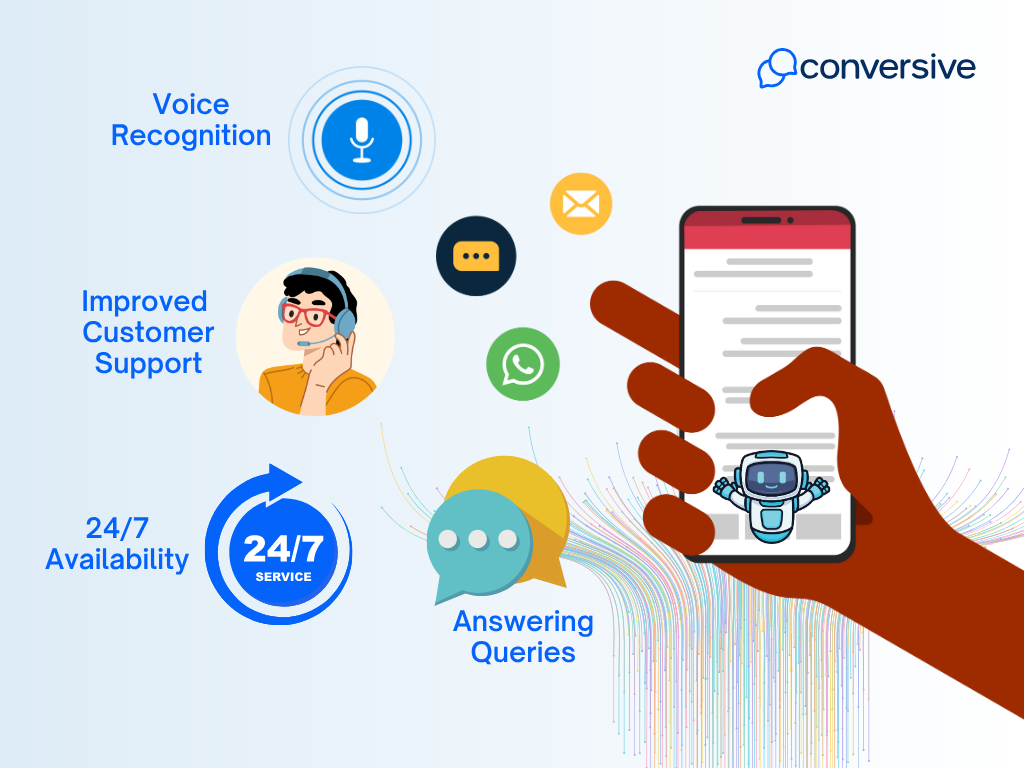
Traditional omnichannel efforts often suffer from data silos and inconsistent messaging. AI dissolves these barriers by providing real-time, context-aware, and continuous support, here’s how:
Real-Time
AI helps analyze information quickly and make decisions fast, so brands can react to what customers do right away. Whether it's showing a special deal when you're checking out or suggesting products during your shopping, AI responds instantly. This immediacy enhances engagement and minimizes friction in the customer journey.
Analogy: It's like having a personal shopper who reacts the moment you pick up an item or change direction in a store.
Use Case: Starbucks uses real-time AI to push offers through its app based on a customer’s current location, time of day, and purchase history, like offering a discount on an iced coffee on a hot afternoon near a store.
Context-Aware
AI can see the whole story of a customer's experience, including what they looked at, clicked on, or asked about earlier, no matter where they are. This allows businesses to tailor messaging and support based on intent, sentiment, and behavior, not just demographics. The outcome is conversations that are more intelligent, meaningful, and that seem natural and tailored just for you.
Analogy: It’s like a hotel concierge who remembers your name, your favorite room, and why you're visiting, all before you say a word.
Use Case: Spotify uses context-aware AI to create personalized playlists based on mood, activity (e.g., workout or relaxation), time of day, and listening habits.
Continuous Support
AI offers uninterrupted, 24/7 assistance across channels, from chatbots to voice assistants, ensuring customers never feel abandoned. Support doesn't have to start over every time you ask a question, the AI remembers what was discussed earlier to keep things smooth and consistent. This creates a seamless experience, even as customers move between devices and platforms.
Analogy: It’s like having a customer service rep who follows you from store to app to call center, without missing a beat.
Use Case: Bank of America’s Erica, their AI assistant, provides continuous support for users, from transaction queries and budgeting tips to fraud alerts, whether in-app or via voice.
Marketers report a 25% lift in ROI from AI-powered personalization, and companies using AI-driven personalization have seen sales increase by ~20%. Companies that are expanding quickly get 40% more of their sales from personalized services compared to companies that grow more slowly. This shows that offering personalized experiences is a major way for businesses to stay ahead of the competition.
AI doesn’t just perform, it learns. Through feedback loops, self-learning algorithms adapt and refine:
AI is not a static tool, it evolves. Unlike traditional systems that rely on fixed rules, AI continuously learns from data, interactions, and outcomes. This learning happens through feedback loops and self-improving algorithms that fine-tune performance with each use. Over time, AI systems become smarter, more efficient, and more human-like, delivering increasingly valuable experiences across industries. Here’s how this iterative improvement plays out in key areas of customer experience (CX):
Use case: In an e-commerce platform, a chatbot learns from thousands of interactions to better interpret customer intent, such as understanding that “need help with my order” could relate to tracking, returns, or exchanges.
Use case: In a retail app, AI tracks previous purchases and browsing patterns to suggest complementary products, like recommending running socks after a customer buys new sneakers.
Use case: In a telecommunications support center, AI learns that repeated keywords like “cancel service” signal high-risk interactions and routes them directly to a retention specialist to reduce churn.
The real strength of AI in helping customers is that it gets better the more it's used. Every time someone interacts with it, it gathers new information, which it then uses to improve how it responds, suggests options, or makes choices. This creates a steady process of learning and getting smarter, called ongoing improvement, so the AI becomes more precise, faster, and better at understanding each person's needs over time.
Developing a genuinely customer-focused approach across all communication channels using AI involves making sure technology meets people's needs at every point of contact. Here's how to use AI successfully, with real-life examples from various industries:
Before deploying AI, map out how customers currently engage across all channels, calls, chats, forms, email, mobile apps, and identify where friction exists. AI should be introduced to solve specific pain points such as long response times, repetitive queries, or lack of personalization.
Choose a system that can understand what your customers really want using smart language tools, predict their needs to customize your conversations, and work smoothly across different methods like text messages, emails, chats, and phone calls. It should also be easy to grow as your business grows and work well with the tools you're already using.
AI becomes really smart when it understands the full picture. By linking it to your customer, employee, learning, or health records, it can easily access and share information. This helps create personalized experiences and keeps everything consistent everywhere.
It's important to keep track of how things are going all the time. Try out different messages to see what works best, watch how people feel about them over time, and make improvements based on how many people take action and are happy. When done properly, you can see positive results and benefits in just a few weeks.
The best AI strategies are not locked into specific platforms, they’re channel-agnostic and customer-centric. As needs shift or new channels emerge, your AI should evolve quickly.
The best customer experiences in 2025 come from using smart, connected ways to interact with people across all channels. These approaches make customers happy, encourage them to stay loyal, and make business operations smoother. Companies that embrace this way of working are not just preparing for the future, they are shaping it.
Start thinking about how to include artificial intelligence in your customer interactions now. The future of great customer service is already happening.
Click here to start building smarter, AI-powered customer interactions.
AI analyzes data across touchpoints to tailor recommendations, support, and content in real-time.
Yes. Many SaaS platforms offer scalable AI solutions suitable for SMBs.
No. AI enhances marketing, sales, inventory, and loyalty management too.
Not at all. Conversive enhances your team by handling repetitive tasks, allowing human agents to focus on complex issues that need a personal touch. It’s about smarter support, not replacing people.
Conversive is built to fit into your existing workflows. It integrates smoothly with CRMs, support tools, and communication channels so you don’t have to start from scratch.
By offering fast, personalized, and consistent service, customers feel heard and valued. This builds trust, improves satisfaction, and keeps them coming back.
Any business that interacts with customers, whether in legal, education, tech, healthcare, or finance can benefit. If you're looking to elevate service and scale efficiently, Conversive is for you.

Subscribe to receive the latest blog posts to your inbox every week.

We respond with 10 support messages to every support email – our customers love it.

Greg Royse
CEO, Tidy

“We were missing 58% of incoming calls. Now we answer 80% + of all incoming enquiries.”

Ajaz Elahi
Director, Sinspeed

“This product is AMAZING and is changing my business. It reaches clients 100x better than email.”

Michael Goldenberg
President, DebtCare Canada

“Conversational Messaging capabilities of SMS-Magic are among the best in the industry and offers security and reliability for SMBs to Large Enterprise Customers.”

Stan Petit
API Senior Partner Sales Manager, Vonage

SMS-Magic is a simple, powerful, SMS solution for Salesforce that has become integral to our day-to-day operations.

Martin McCauley
Director of Patient Services, BioSpine Institute

“If our loan applicants did not receive timely SMS-Magic text messages, we wouldn’t be funding loans & we would lose customers.”

David Ross
Head of IT, Upstart

“Having full-context conversation history from SMS-Magic helps us understand what has been sent to the customer across different departments and if those messages have been opened.”

Camilla Mills
Marketing Campaigns Manager, DaySmart

We average a 59% response rate from clients to text message surveys.

Craig Garber
CFO, LifeMoves

.png)