.png)

Subscribe to newsletter
Subscribe to receive the latest blog posts to your inbox every week.

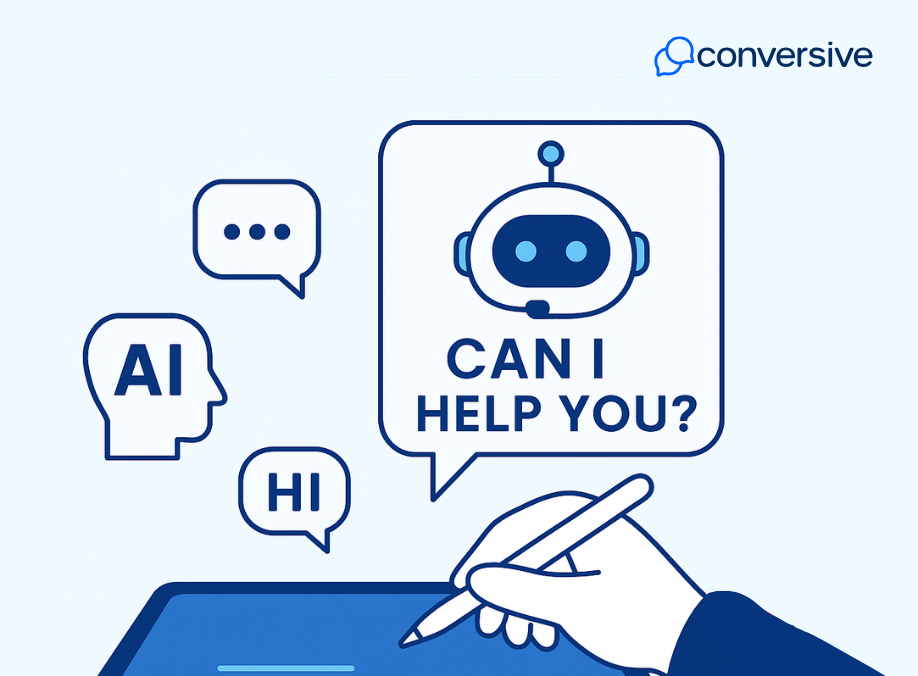
Let’s face it, customers today want things faster and more tailored to them. They expect companies to know what they need even before they ask and to respond instantly. Because of this, using AI isn't just a nice bonus anymore, rather it's a necessity!
For instance, an online clothing store tracks a customer's previous purchases and browsing habits. When the customer logs in, the website instantly shows personalized outfit suggestions, offers a chat with an AI assistant for quick size or style questions, and predicts future preferences to suggest new items before the customer even searches for them.
In this playbook, I’ll walk you through why AI in Customer Experience (CX) is one of the most potent competitive weapons of the digital age, backed by real-world case studies, stats, and actionable strategies. So, let’s get started with our first obvious question, Why are AI and CX now inseparable?
Customer experience, or CX, used to mean just being friendly and having easy, hassle-free service. Now, it’s mainly about using digital tools, offering many ways for customers to interact (like websites, webchats, apps, social media), and making decisions based on lots of data. Artificial intelligence (AI) is the key technology behind this shift, helping companies understand and improve how they connect with customers across all channels.
Whenever you see movie suggestions on Netflix that are tailored just for you, get updated about flight delays as they happen, or chat with a customer service bot to solve a problem, you're using services that rely on AI technology to improve your experience, in fact, you’re experiencing the frontlines of AI-powered CX.
According to Pylon's comprehensive case study, AI-powered customer support reduces response times by 97%. Master of Code Global reports, 46% of financial institutions employing AI have reported improvements in customer experience, with 79.5% planning to increase investments in AI-driven customer experience technologies.
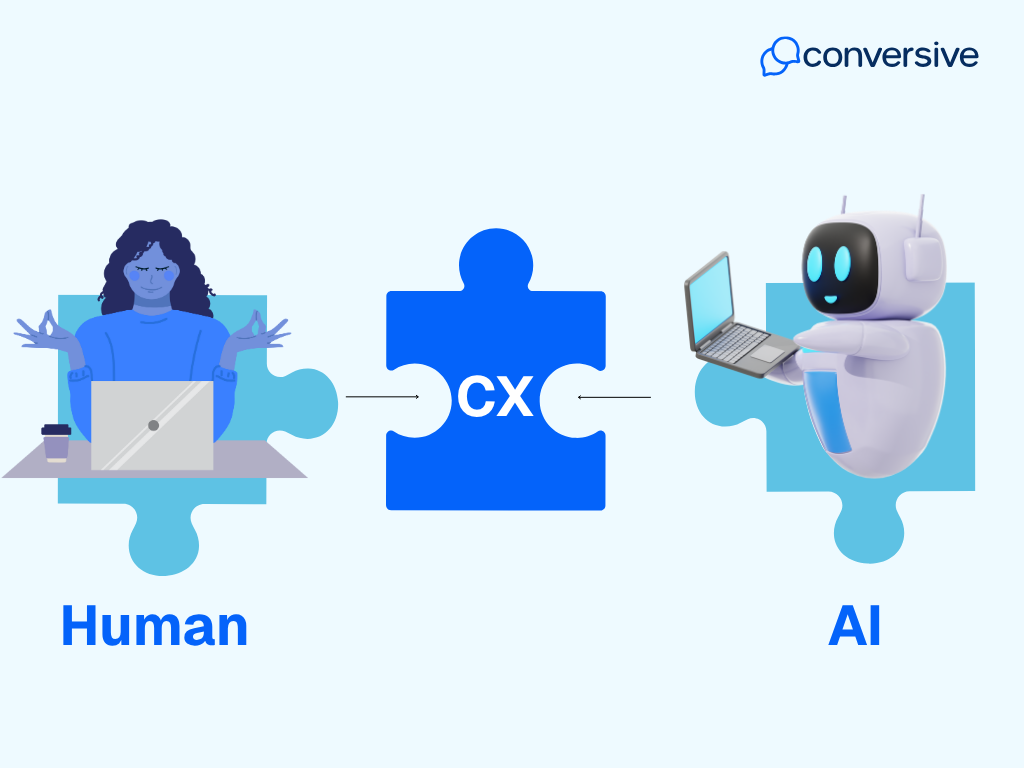
AI helps improve how companies interact with customers. It can customize their experience based on data, handle simple tasks automatically, and be available at all times. This makes customers happier, more likely to stay loyal, and helps the business do better.
Below is a more detailed look at the benefits:
Let’s be honest, traditional ways of dividing customers into broad groups like “millennials” or “frequent shoppers” are no longer effective. Customers now expect brands to understand them personally, not just categorize them broadly.
With AI in the toolkit, companies can process a lot of data instantly and learn from customer behaviors. This means they don’t just create general groups anymore but can tailor experiences or offers directly to each individual at any moment.
This also means, no more fixed segments, AI can create “dynamic personas” that can change based on what the customer is doing right now. For example, it looks at recent activity, mood, location, and preferred ways of communicating to figure out what the customer needs at that moment.
A good example is Netflix. Instead of just recommending shows based on what genres you like, their AI considers how long you watch, where you pause or stop, what device you're using, and even which images for shows catch your eye. This allows Netflix to give each person a highly personalized viewing experience in real time.
Brands that personalize merely by name or basic demographics are falling behind. With AI, personalization becomes:
Pro Tip: If you're building or auditing your CX personalization stack, ask:
Customer patience is shrinking, and we are already experiencing that. No one wants to wait for hours, or even minutes. Customers expect immediate, accurate, and helpful responses whenever they reach out, no matter the time or channel.
With the advancements in natural language processing and machine learning, AI can now chat with people in a way that feels quite natural. These virtual helpers aren't just answering simple questions, they can walk you through complicated tasks, suggest things tailored to you, and pass your problem on to a real person if it’s too tricky for them.
And this isn’t a passing trend. By 2027, chatbots will become the primary customer service channel for roughly a quarter of organizations, according to Gartner, Inc.
AI never sleep or take breaks, so they can always be working. They help keep the way a company communicates consistently, solve customer problems quicker, and decide which issues to focus on first. Plus, they learn from every interaction to get better over time.
For example, Amtrak’s AI helper, Julie, handles over 5 million customer requests each year. It saves money on customer service and makes customers happier. Julie doesn’t just answer questions, she also helps book tickets, fix problems, and make sure customers get what they want fast.
Brands that only offer limited-hour support are increasingly out of sync with modern customer expectations. With AI, support evolves into:
Pro Tip: If you're evaluating or upgrading your customer service strategy, ask:
Today, speed equals satisfaction, which means, people want things quickly and get annoyed when they have to wait or deal with complicated processes. It also hurts businesses because unhappy customers can lead to lost sales. Using AI helps fix these problems by making everything run more smoothly and efficiently.
At the heart of this transformation is Natural Language Processing (NLP). Instead of just reading what someone says, NLP enables figuring out what the person really wants or needs. For example, they can quickly sort customer complaints, figure out which ones are urgent, and send them to the right person, or even fix the problem automatically.
Vodafone uses an AI helper named TOBi that manages 45 million monthly calls and resolves 70% of digital inquiries independently. It cuts call times by over a minute and boosts customer satisfaction scores.
Brands that rely solely on human speed are hitting a ceiling. AI breaks through that limit by making operations:
Pro Tip: If you’re looking to boost operational performance, ask:
You might have a lot of information about your customers, like emails, chat messages, reviews, and phone calls, but you don’t always know how to use it effectively. AI can help by sorting through all that messy data and finding useful patterns. This means you understand not just what has happened, but also why it happened and what might happen next, helping them make better decisions.
AI-powered tools like sentiment analysis, customer journey analytics, and predictive modeling work in real-time, pulling signals from every interaction to create a true 360° view of each customer. Instead of relying on periodic surveys or outdated dashboards, companies can now get a live pulse on how customers feel and what they need.
Alorica, for example, helped a sportswear brand cut customer escalations by 75% using detailed analysis, and they improved a client’s efficiency by 20% with their specialized AI platform.
Brands that rely on lagging indicators or gut instinct are missing the full picture. With AI, insights become:
Pro Tip: If you're upgrading your analytics strategy, ask:
Keeping customers happy and sticking around is just as important as getting new ones. The tricky part is figuring out when someone is about to leave and what to do about it. That's where AI helps by looking at how customers behave and predicting who might be about to churn, or leave.
AI finds signs like less interest, negative comments, or changes in what they buy. When it spots these signs early, companies can send special offers or reach out personally to try to keep the customer. This helps them act before someone actually leaves.
According to IBM, predictive analytics can predict customer churn with up to 90% accuracy, enabling proactive retention strategies. AI also learns over time what makes each customer happy, their favorite rewards, exclusive content, or the best way to communicate, so brands can build stronger, lasting relationships.
Brands that wait for customers to leave before reacting risk losing them forever. With AI, retention becomes:
Pro Tip: When building your retention strategy, ask:
Let’s clear the air, AI isn’t here to take over the contact center. It’s here to make human agents faster, smarter, and more effective.
The future of customer experience is not human vs. machine, rather, it’s human + machine. And the best brands are already embracing this hybrid model.
AI-powered tools like chatbots, voice assistants, and automated phone systems now handle most basic customer questions, like checking an order, resetting a password, or asking about bills. This lets human workers concentrate on more complicated or sensitive issues that need understanding and care.
Forbes Advisor reports that 64% of business owners believe AI has the potential to improve customer relationships, indicating a positive outlook on the role of AI in enhancing client interactions. This change makes customer support faster and more efficient, while also helping human agents avoid getting overwhelmed and exhausted by boring or repetitive tasks.
AI is changing how the people working in support or customer service do their jobs. It’s like having a really intelligent helper beside them. During chats or calls, AI can suggest what to say next, notice how the customer feels, and quickly find helpful articles or solutions.
For example, DevRev’s AI assistant helps support workers respond faster, about 40% quicker, by sorting issues automatically and showing answers before agents even ask for them. Overall, this makes solving problems quicker and helps support teams do better work more confidently.
This kind of augmentation not only speeds up resolution time, it also boosts confidence and performance across the entire support team.
The AI-powered CX stack has evolved rapidly. It's not just doing routine jobs anymore but also helping companies plan and make better decisions. Here are the main features and how different types of businesses are using them:
AI uses customer data and behavioral signals to predict satisfaction, churn, and future needs, thus, enabling proactive CX strategies.
Use Cases:
AI analyzes support requests in real-time and routes them to the right team or agent based on complexity, tone, and priority.
Use Cases:
AI delivers context-aware, individualized experiences, from emails and offers to chat and in-app messaging.
Use Cases:
AI-powered chatbots and voice assistants provide instant, 24/7 support, growing smarter with every interaction.
Use Cases:
AI listens to and analyzes calls in real time, detecting sentiment, keywords, and compliance gaps to improve quality and coaching.
Use Cases:
AI ensures customers get consistent, personalized service across chat, email, phone, and social, without repeating themselves.
Use Cases:
Pro Tip: When evaluating smart CX tools, prioritize those with native integrations to your CRM, NPS platform, and product analytics. Seamless data flow is critical to making AI insights actionable in real time.
Let’s not pretend AI is perfect. While it offers tremendous potential, it also introduces real risks that businesses must navigate responsibly. Here's what to watch out for:
AI systems are only as good as the data they're trained on. If historical data reflects biases, based on race, gender, income, or geography, the models will likely replicate or even amplify them.
Examples:
What to do: Regularly audit models for disparate outcomes. Include diverse data sets and stakeholders in model training and validation.
AI often relies on large-scale data collection, from behavioral tracking to voice transcripts. If not handled transparently, this can damage trust and run afoul of regulations.
Examples:
What to do: Implement data minimization, strong consent protocols, and secure handling practices. Always tell customers how their data is being used.
AI improves speed and scale, but it can't fully replicate empathy, judgment, or nuanced conversation, especially in sensitive situations.
Examples:
What to do: Design AI to augment, not replace, human teams. Offer easy handoff to live agents and empower staff to override automation when necessary.
Compliance is non-negotiable, but ethical AI goes beyond the legal minimum. Frameworks like those from the OECD, AI Now Institute, and IEEE advocate for:
Conversive brings AI-powered customer experience to life by combining real-time engagement, and CRM intelligence into a single, unified messaging platform. It enables organizations to deliver faster, more relevant, and highly personalized interactions at scale, while maintaining full regulatory compliance.
Here’s how Conversive directly supports the core benefits of AI in CX:
Conversive leverages real-time CRM data to personalize every conversation based on customer behavior, history, and preferences. This ensures that interactions are not just targeted, they’re meaningful.
AI-powered workflows automate responses to high-intent actions such as inquiry submissions, appointment bookings, or policy updates. Whether it’s SMS, WhatsApp, or Facebook Messenger, responses are triggered instantly and routed intelligently.
Every message is logged against the appropriate record in the CRM. This creates a continuous, cross-channel thread that improves team coordination and ensures no context is lost, even when conversations are handed off between departments.
Conversive handles common tasks like reminders, FAQs, and follow-ups. When a situation requires a human touch, it enables seamless handoff to a live agent, thus, preserving context and continuity.
Built-in support for TCPA, HIPAA, and GDPR means customer interactions remain secure, permission-based, and audit-ready, especially important in industries like healthcare, education, and finance.
Let’s explore how we can help you deliver smarter, more connected experiences, book a demo, today!
AI helps brands deliver faster, more personalized, and consistent interactions, turning CX into a key competitive advantage.
AI creates real-time, behavior-based personas, going beyond fixed groups like age or location for deeper personalization.
Yes. AI spots early signs of disengagement and triggers timely, tailored actions to retain at-risk customers.
No. AI supports agents by handling routine tasks, so humans can focus on complex, high-value conversations.
Not anymore. Scalable, no-code tools make AI accessible and effective for businesses of all sizes.
Bias, privacy issues, and over-automation are key concerns. Responsible design and human oversight are essential.
Many teams see improvements in speed and satisfaction within weeks, especially with the right use cases.
Look for platforms with chat automation, predictive insights, CRM integration, like Conversive for unified, intelligent CX.


Subscribe to receive the latest blog posts to your inbox every week.

We respond with 10 support messages to every support email – our customers love it.

Greg Royse
CEO, Tidy

“We were missing 58% of incoming calls. Now we answer 80% + of all incoming enquiries.”

Ajaz Elahi
Director, Sinspeed

“This product is AMAZING and is changing my business. It reaches clients 100x better than email.”

Michael Goldenberg
President, DebtCare Canada

“Conversational Messaging capabilities of SMS-Magic are among the best in the industry and offers security and reliability for SMBs to Large Enterprise Customers.”

Stan Petit
API Senior Partner Sales Manager, Vonage

SMS-Magic is a simple, powerful, SMS solution for Salesforce that has become integral to our day-to-day operations.

Martin McCauley
Director of Patient Services, BioSpine Institute

“If our loan applicants did not receive timely SMS-Magic text messages, we wouldn’t be funding loans & we would lose customers.”

David Ross
Head of IT, Upstart

“Having full-context conversation history from SMS-Magic helps us understand what has been sent to the customer across different departments and if those messages have been opened.”

Camilla Mills
Marketing Campaigns Manager, DaySmart

We average a 59% response rate from clients to text message surveys.

Craig Garber
CFO, LifeMoves

.png)