.png)

Subscribe to newsletter
Subscribe to receive the latest blog posts to your inbox every week.

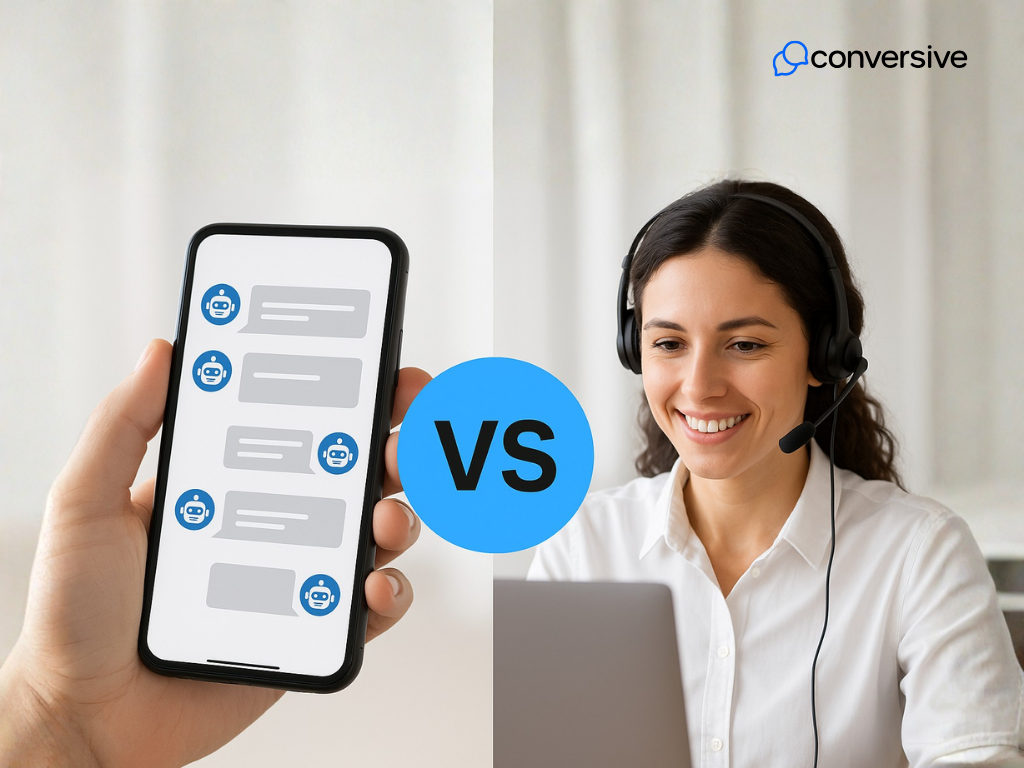
Over the past three years, conversational AI has become embedded in both business and everyday life. Businesses have adopted chatbots to streamline customer service, automate lead capture, and reduce repetitive workload. Simultaneously, consumers have grown accustomed to virtual assistants like Alexa, Siri, and Google Assistant to help with daily tasks, from scheduling to smart home control.
At a glance, both tools, AI chatbots and virtual assistants, rely on natural language interaction. But their core capabilities, intelligence levels, and business roles diverge significantly.
Chatbots are purpose-built for handling structured, transactional exchanges. Think of them as intelligent forms that live inside your website or CRM. Virtual assistants, on the other hand, are designed to support ongoing, often voice-driven interactions that span across apps, devices, and personal routines.
This article explores the technical, functional, and strategic distinctions between AI chatbots and virtual assistants. We’ll compare their architectures, deployment channels, personalization capabilities, and most importantly where each tool excels in real-world industries.
Let’s begin the discussion with how both of them work.
While both AI chatbots and virtual assistants fall under the umbrella of conversational AI, they’re built to solve different problems.
Chatbots are typically embedded into websites, mobile apps, or CRMs. They’re programmed to handle structured queries such as appointment scheduling, lead qualification, or FAQ responses. Most operate on decision trees or rule-based flows, although more advanced bots integrate narrow AI for language understanding. Their strength lies in repetitive interactions that follow clear patterns, enabling businesses to scale support without scaling headcount.
Virtual assistants, by contrast, are built into devices or apps like smartphones, smart speakers, or operating systems. Tools like Siri, Alexa, and Google Assistant use contextual natural language processing (NLP), enabling them to understand loosely phrased questions, remember user preferences, and manage complex, multi-turn conversations. They’re designed to serve the individual user offering ongoing help across domains like scheduling, reminders, entertainment, and productivity.
Here are the key differences between AI chatbots and virtual assistants:-
AI Chatbots are best for businesses managing high-volume, short-form interactions, while virtual assistants act as digital aides focused on personalized, ongoing help.
While both tools enable conversational interaction, chatbots are primarily designed for business environments where structured, repeatable tasks are the norm. In contrast, virtual assistants serve individuals across a range of apps and devices, offering personalized support for everyday tasks.
Their architecture and deployment reflect these distinct goals. A quick summary of differences between their features and capabilities of AI chatbots and virtual assistants:-
And, now let’s discuss these differences in detail:-
Chatbots are best suited for handling repetitive, transactional interactions that follow defined business rules. These include customer service workflows, form submissions, lead capture, appointment booking, and automated status updates. They help organizations scale support and engagement without increasing operational complexity.
Virtual assistants, on the other hand, are built to assist users across a variety of domains and applications. They are commonly used for managing calendars, retrieving information, sending messages, or controlling smart devices. Their focus is on enhancing the end user’s productivity and convenience in day-to-day life.
Most chatbots operate using predefined logic, often relying on rules or narrow natural language processing (NLP) to interpret user input. While this makes them reliable for specific use cases, their ability to handle ambiguity or context is limited.
Virtual assistants use more advanced, context-aware NLP engines. They can recognize a wide range of language patterns, adapt to conversational context, and retain information across interactions. This allows them to respond more naturally and intelligently over time.
Chatbots typically operate within structured environments, such as websites, mobile apps, or CRM interfaces. Users engage with them through text-based chat interfaces embedded in landing pages, help centers, or messaging platforms like WhatsApp or Facebook Messenger.
In contrast, virtual assistants are often voice-first tools embedded within operating systems or devices. They can be accessed through smart speakers, smartphones, and even in-car infotainment systems. Their strength lies in enabling hands-free, natural language interaction across multiple contexts.
Chatbots generally offer limited personalization. They may access CRM data to tailor responses within a session, but most do not retain memory beyond a single interaction unless integrated deeply with backend systems.
Virtual assistants are designed to remember user preferences, recurring tasks, and contextual details over time. This memory allows them to deliver more tailored experiences, such as suggesting calendar changes or adjusting responses based on past interactions.
Although both tools use conversation as a medium, they serve very different purposes. Chatbots are optimized for business processes that require speed, structure, and scale. Virtual assistants, by contrast, are geared toward continuous, individualized support across personal and digital ecosystems.
While AI chatbots and virtual assistants both support automation and engagement, their effectiveness varies by context. Both find different use-cases in different industries such as healthcare, education, real estate, and finance.
The difference often comes down to the structure and sensitivity of the customer journey. In regulated or workflow-driven sectors like healthcare and education, chatbots help streamline communication, reduce manual tasks, and improve compliance. Whereas, virtual assistants shine in scenarios that require ongoing, voice-enabled interactions or device-based support, particularly in consumer-facing experiences.
In healthcare, communication needs to be secure, timely, and highly compliant. Chatbots are especially effective in reducing administrative burden, while virtual assistants support wellness use cases at the individual level.
In the education sector, timely updates and student engagement are critical. Chatbots integrate seamlessly into CRM systems to automate updates, while virtual assistants assist students with reminders and accessibility.
In real estate, fast lead response and qualification drive results. Chatbots assist with lead capture and scheduling, while virtual assistants help clients navigate listings and manage smart home features.
In finance, accuracy, security, and responsiveness are paramount. Chatbots are ideal for handling document workflows and reminders, while virtual assistants provide more consumer-facing advisory support.
AI chatbots thrive in industries where structured communication, CRM integration, and compliance are essential. Virtual assistants complement these efforts in consumer-facing environments that benefit from voice interaction, cross-app access, or personalization at the device level.
Selecting between an AI chatbot and a virtual assistant requires a close look at your business’s customer journey, complexity of interactions, integration ecosystem, and scalability goals.
While virtual assistants offer broad functionality and personalization, businesses in regulated industries benefit more from the structure, speed, and CRM-native design of chatbots.
Here’s what you should look at while choosing an AI chatbot or a virtual assistant for your business:-
If your workflows involve structured, repeatable interactions such as scheduling, status updates, or qualification, chatbots offer a better fit. They are designed to execute rule-based flows quickly, enabling scalable automation across thousands of concurrent interactions.
On the other hand, if your users need help navigating multiple applications, performing device-level actions, or completing loosely structured requests, virtual assistants may offer a better experience. They can understand natural conversation patterns and respond with more flexibility, especially in consumer tech environments.
Chatbots are often built to integrate natively with CRMs, enabling automation triggers based on real-time data such as opportunity status, case updates, or lifecycle stages. This is critical for organizations that rely on CRM systems to drive engagement, compliance, and reporting.
Virtual assistants, by contrast, integrate primarily with consumer apps, operating systems, or smart devices. While they can offer calendar syncing or contact access, they typically lack deep integration with business-critical systems like CRM, EHR, or financial platforms.
Chatbots generally require less time and fewer resources to deploy. With pre-built workflows, compliance templates, and CRM triggers, businesses can go live in weeks. This makes them ideal for mid-market teams looking for high ROI with minimal IT overhead.
Virtual assistants involve more complexity in setup and ongoing management, particularly when custom integrations or voice interfaces are needed. They often require a higher upfront investment and longer development timelines, which may not align with every business’s needs or pace.
Follow this decision framework to figure out the right tool for your business:-
Virtual assistants offer powerful capabilities but in most business environments, especially where compliance, structure, and CRM integration matter, chatbots deliver greater efficiency and return on investment.
If your business operates in a regulated, service-intensive industry where trust, compliance, and operational scale matter, Conversive is built for you. Unlike generic virtual assistants or basic chatbots, Conversive is purpose-designed for industries like healthcare, education, finance, and professional services.
Conversive is a CRM-native platform that connects deeply with your existing systems, triggers intelligent conversations from real-time data, and ensures every interaction is compliant. Whether you're capturing leads, automating reminders, or routing inquiries to the right team, Conversive helps your business scale without sacrificing quality.
Conversive can help you:
Conversive is already powering outcomes across industries that demand both precision and personalization:
Conversive is an intelligent communication engine behind regulated customer journeys. It combines automation, compliance, and multi-channel reach to help businesses convert more inquiries, reduce manual work, and deliver better service right from within CRM.
Ready to see what Conversive can do for your business? Talk to our team today to explore how AI-powered messaging can streamline your customer engagement and drive measurable results.
AI chatbots are designed to handle structured, task-based interactions such as lead capture, form filling, appointment scheduling, or support ticketing. They work well within websites, CRMs, or messaging platforms and are often rule-based.
Virtual assistants, such as Alexa or Siri, are built to assist individual users across a wide range of tasks, including calendar management, device control, and voice commands. They rely on contextual understanding and memory to provide ongoing, multi-domain help.
In terms of language flexibility and contextual learning, virtual assistants often use more advanced NLP models. However, this doesn’t necessarily make them a better fit for business. Chatbots are optimized for compliance, workflow automation, and integration into enterprise systems where accuracy and structure are critical.
A business should consider a chatbot when its goal is to automate structured workflows such as lead qualification, appointment reminders, customer follow-ups, or status updates. If fast deployment, CRM integration, and message compliance are priorities, a chatbot platform like Conversive is often the better solution.
Yes, many organizations use both. A chatbot can serve as the first point of contact for handling common questions or data capture. For more complex, personalized, or voice-driven interactions, a virtual assistant can be integrated as a second layer, especially on personal devices or mobile apps.
Industries like healthcare, education, finance, and legal services tend to prefer chatbots due to their need for regulatory compliance, structured workflows, and CRM-native automation. Virtual assistants are more common in consumer tech, smart home ecosystems, and productivity tools where voice access and personalization are prioritized.


Subscribe to receive the latest blog posts to your inbox every week.

We respond with 10 support messages to every support email – our customers love it.

Greg Royse
CEO, Tidy

“We were missing 58% of incoming calls. Now we answer 80% + of all incoming enquiries.”

Ajaz Elahi
Director, Sinspeed

“This product is AMAZING and is changing my business. It reaches clients 100x better than email.”

Michael Goldenberg
President, DebtCare Canada

“Conversational Messaging capabilities of SMS-Magic are among the best in the industry and offers security and reliability for SMBs to Large Enterprise Customers.”

Stan Petit
API Senior Partner Sales Manager, Vonage

SMS-Magic is a simple, powerful, SMS solution for Salesforce that has become integral to our day-to-day operations.

Martin McCauley
Director of Patient Services, BioSpine Institute

“If our loan applicants did not receive timely SMS-Magic text messages, we wouldn’t be funding loans & we would lose customers.”

David Ross
Head of IT, Upstart

“Having full-context conversation history from SMS-Magic helps us understand what has been sent to the customer across different departments and if those messages have been opened.”

Camilla Mills
Marketing Campaigns Manager, DaySmart

We average a 59% response rate from clients to text message surveys.

Craig Garber
CFO, LifeMoves

.png)